Showing posts with label Travel. Show all posts

SaBANG

We flew from Manila to Puerto Princesa, which was my first experience of a domestic only airport. It was tiny, chaotic and full of mosquitoes. If this wasn’t disorienting enough, our shampoo had exploded in Dave’s bag – this was, as it turned out, a sign of things to come.

We then took a tricycle (Nazi Indiana Jones side-car bike) to our guest house, and the journey showed us a different side of the Philippines – one we were very glad to be in. Puerto Princesa was how we both had imagined the ‘Ppines to be.

That evening we went to a bar for some food and drinks, and ended up dancing the night away on stage with a group of Koreans.
The next day we headed to the bus station to get a jeepney to Sabang – home of the world’s longest underground river (one of the new 7 natural wonders).

There were some lovely views from the jeepney, which was crammed full of people and cargo. We were constantly stopping to unload goods and pick up people. Along the way we passed a cockfight, which we couldn’t really see, but could definitely hear.
The Jeepney - people often sit on top!
We arrived in Sabang and were immediately whisked away to a “resort” – a beach hut with 3 hours of electricity a day.

Our stay in this hut resulted in several additions to our hostel Wildlife-Watch list: a big, noisy gecko, a bat, and seemingly a few squirrels who picnicked on the porch. We were also surrounded by cockerels, turkeys and dogs, all of whom loved to talk. 
Sabang had some nice beaches and was pretty cool.
After a night’s disrupted sleep, we set off to explore the underground river. We first had to take a boat to the entrance and found a group to share the cost with. While we were waiting for the boat, there was a HUGE bang from the car park 50 metres away. A dust cloud erupted, and everyone was left very shocked and confused as to what had happened. A Filipino girl in our group said that people were saying it was a bomb, but didn’t want to alarm the tourists so were keeping it quiet.

Anyway, we decided to carry on and enjoyed a beautiful boat ride followed by a short walk through the jungle to get to the river, arriving in one piece and having almost managed to forget about the BANG. 
The cave that the river runs through is incredible. It is full of weird formations made by mineral deposits, and there are thousands of bats hanging from the ceiling. Our guide was very informative and funny, stating that apparently at last count there were 41,234 bats from 8 different species. 
Lifejackets were essential...
In one of the 7 natural wonders of the world...
Check out those bats
Mushroom rock
Spot the naked woman's arse!
After the boat ride through the river, Dave, three Danish guys, and an Italian from our group decided to walk the jungle path back to the town, where as I opted to take the lovely boat ride back.

The trek was my first jungle trek for a while and I was very excited, especially after seeing a giant lizard right at the start!
The path was barely used and we got the feeling that not too many people had ventured this way before. We were really in the heart of the jungle with no-one around for kilometres and it was exciting to hear all the sounds that the jungle was throwing at us.

At one point, we came across what appeared to be a lone monkey swinging from a tree. We approached for a better look and were surrounded by a tribe of monkeys a dozen strong. We watched, snapped photos, then found our way back to the trail and continued.
The next stop was a cave where, with the help of my torch (I’m always so prepared), we could do some amateur caving. Being the brave hearted fool I am, I staggered through a small opening while being followed by the group. I stopped when I brushed up to something and looked round to see this 5cm from my face:
Whip-tail scorpion (not a spider)
As fast as I could, I clambered ungraciously out of the cave and left everyone else to do some exploring while I studied the hundreds of spider’s eggs.
The jungle trek ended abruptly and we were suddenly gazing upon a pristine, empty beach where we cooled off with a delightful swim.
Victory swim after a 3 hour hike!
Meanwhile, I had arrived back in the town to discover that the aforementioned car park had been roped off and the whole place was crawling with police and army guys. Apparently, it had indeed been a bomb! We later read that a sack containing cheap Chinese lighters and bottles of fertilizer had be buried under the soil, gradually getting hotter in the sun until it exploded. Fortunately, nobody was hurt by the blast, although a few cars suffered some minor damage.
Needless to say I decided to keep my distance from the area and took shelter in the Sheridan hotel, with a cocktail.

Costs (per person)
Manila to Puerto Princesa (Flight - Airphilexpress) = 2300 Pesos (£34, $54)
Airport Fee (domoestic) = 40 Pesos (£0.70, $1)
Puerto Princesa to Sabang Jeepney = 200 Pesos (£3, $5)
Sabang to El Nido Minibus = 800 Pesos (£12, $19)
Sabang Beach hut = 400 Pesos (£6, $10)

Meeting a Hiroshima Survivor

We awoke in Hiroshima and with the dark clouds and hurried rain we were wondering why we had decided to come here in the first place. I love a good history lesson as much as the next Mr Hughes (my history teacher) but walking around peace parks in the peaceing rain might be a bit much.

Luckily the rain quietened down and we began to explore the city, which is now a small beacon of hope in a world full of governments seemingly determined to destroy us all with nuclear weapons. Perhaps the pathetic fallacy would suit the day after all.
A-Dome

First stop was the atomic dome – one of the only buildings that had partially survived the A-bomb. It was undergoing tests to make sure it wouldn’t collapse, hence all the scaffolding.

The children’s monument is a dedication to the children who were instantly vaporised or died slower deaths from radiation sickness, which ranges from days of agonising pain to 10 years of fighting and losing to Leukaemia and other cancers.
I loved all of the cranes. It's a symbol of hope to make 1000 origami cranes and this monument is filled with tens of thousands. It's beautiful.
The memorial cenotaph holds all 140,000 names of those killed by the bomb, excluding all the names of people who died of cancer related sickness years later.

We then spent a couple of hours brushing up on our history in the museum. It didn’t gloss over the atrocities that the Japanese had committed, but it certainly didn’t emphasise them. I read nothing about the harsh imprisonment of Allied troops during WWII. However it did mention the Nanking massacre in China where Japanese troops executed an estimated 300,000 people and raped 20,000 women. The Chinese were used for bayonet practice and in “killing competitions” and it really is one of those “conflicts” that makes you realise the brutality of war and in particular, the Japanese.
Before
After
I got talking to a Japanese volunteer who was in his seventies and spoke very good English. After 10 minutes he mentioned he had been 10 years old when the bomb exploded 1.4km away from him. I suddenly noticed the scars of burns all over the left side of his face. He explained that he was looking at the testing equipment the Americans had dropped by parachute and holding his hand up to block the sun when the bomb detonated. He had burns on that hand and counted himself extremely lucky that he had survived and lived to be as old as he was.
He recalled a story about his dad surviving the aftermath by drinking Sake (rice wine), as it proved to have vital calories and was the only clean source of fluid. Many bomb survivors ended up dying from drinking the black rain that fell following the nuclear attack. One of the most ridiculous, yet very impressive, things we learnt was that the tram system in the city was up and running within 4 days after the disaster – that is truly insane!

I’m all for Nuclear disarmament but I also strongly believe that the Japanese deserved to be bombed and it was the cleanest way to end the war. Note that two days after the first bomb, Japan had still refused to surrender and was trying to solidify a deal in which they would remain a strong threatening power in the region. And then Nagasaki happened and they agreed to an unconditional surrender. The leaders had previously asked for 100 million honourable deaths.

Ok, enough darkness, Let's move onto the next step of our journey, which involved a ferry crossing to Itsukushima where we visited yet another shrine.


Our last Japanese Pagoda

Before we had even managed to say the name of the previous area (Itsukushima), we were back in Fukuoka and back on the ferry to Busan. This time our ferry was during the day, so the facilities were actually open. I took full advantage and had a lovely shower, followed by a relaxing bath. It was really surreal to sit in a bath and see the water and waves outside of the window too. After the bath I had to try and sleep because I started feeling really sea-sick. When we finally arrived back in Busan I couldn't wait to get off the ferry and back onto Korean soil. Our return to Busan marked the start of our final 3 weeks of teaching...and final month in Korea. Blimey...!

Oooooooooooooooooooooo-saka

After the visual delights of Fujisan we were back in a big city, Osaka. Osaka is Japan’s second city and it was fantastic! Our low expectations were shattered as we were overwhelmed by the signs, the food and the beautiful (and mostly free) shrines and temples.

Our first shout out goes to our Couchsurfer friend Pheobe who hosted us and was amazing! She gave us a spare key to her flat and was an incredibly kind host - thank you so much Phoebe.

First stop was Dotonbori in Namba, which is the main nightlife area and is buzzing with restaurants, bars, and signage!

Blowfish - I dare you to try it!


Plant pots on a building!
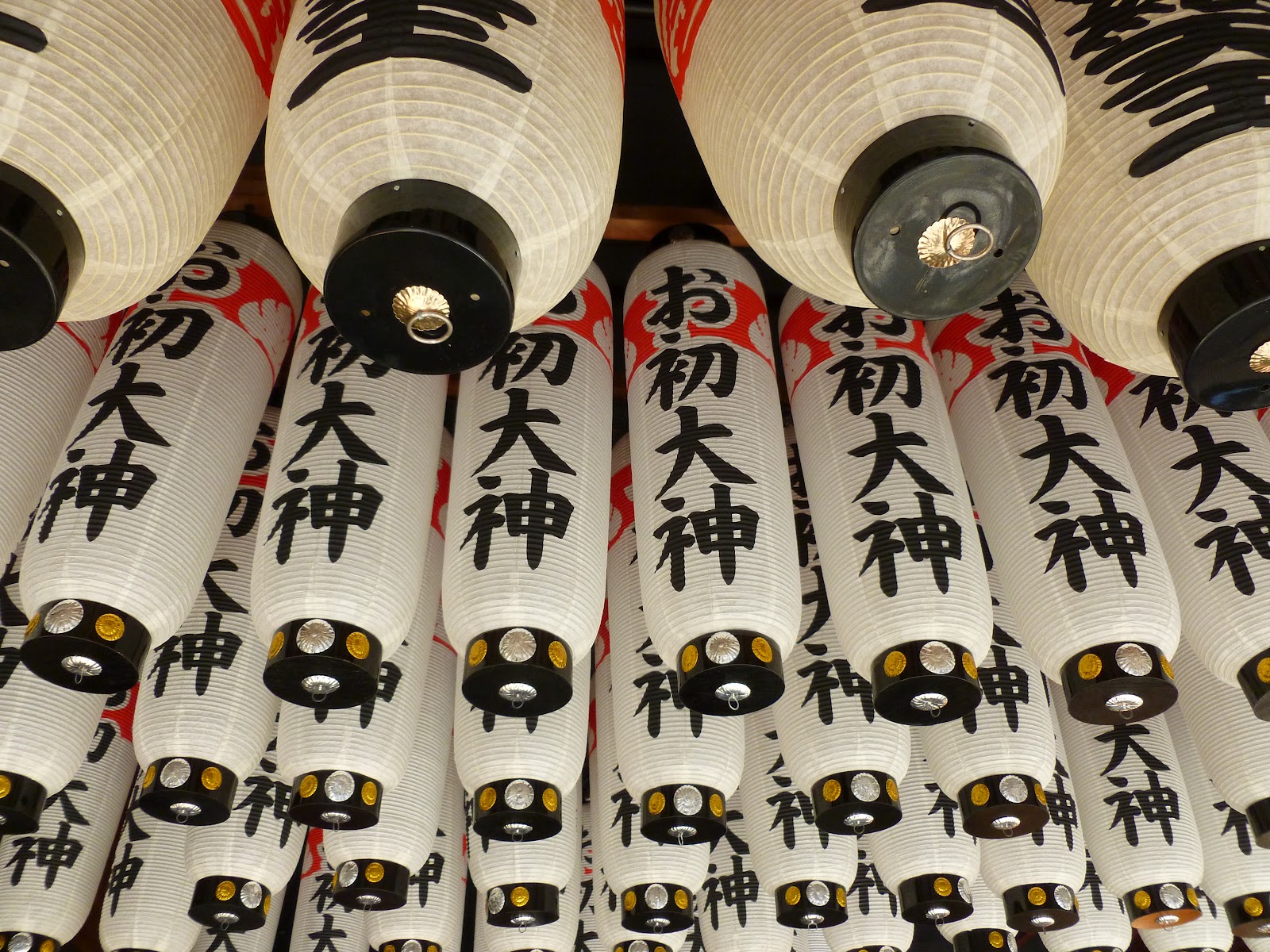
We stumbled upon this hidden gem in the heart of Namba – what a beautiful little temple called the Hozenji Temple – a real must-see!


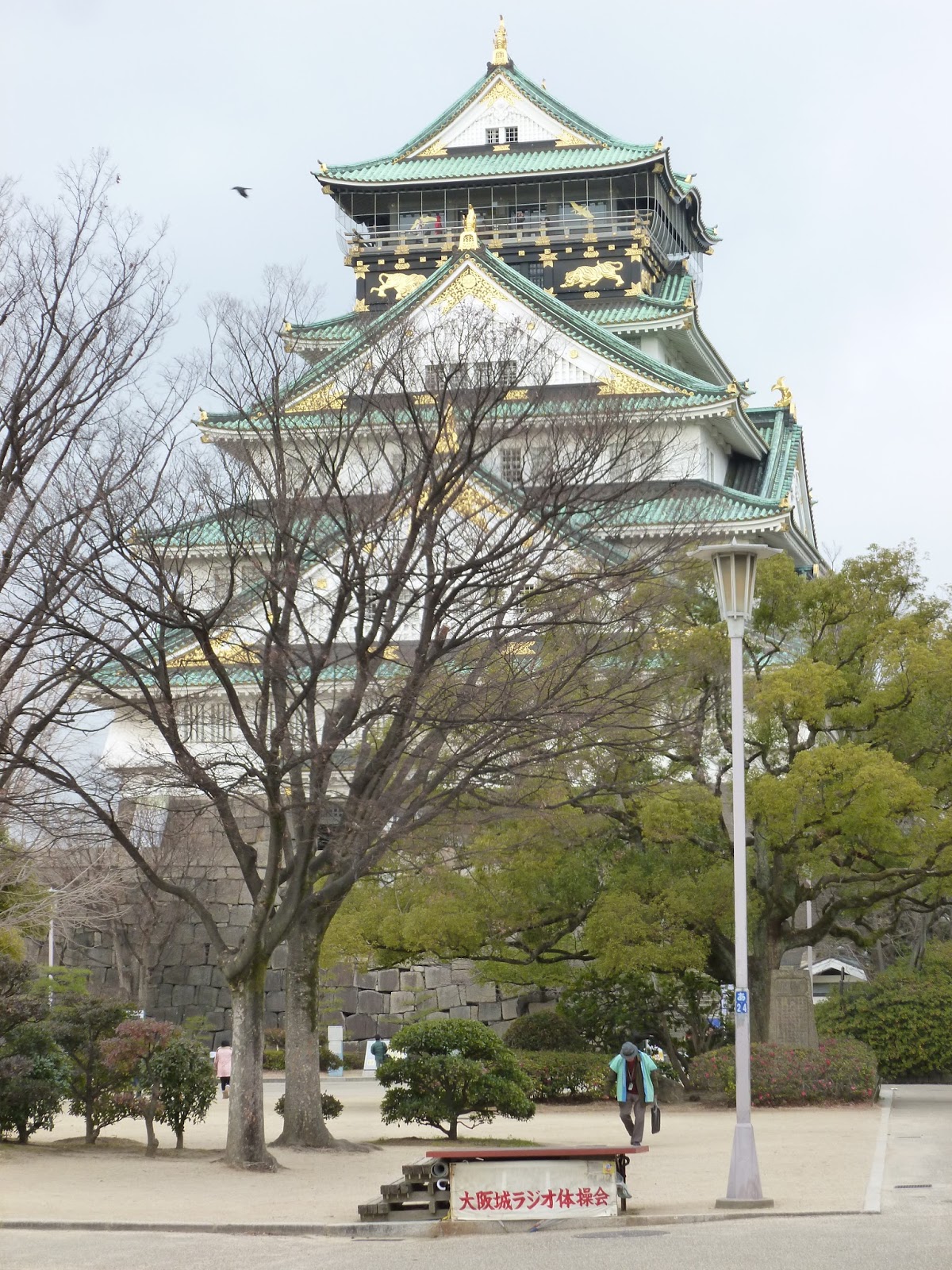
We then went to Osaka Castle and the surroundings were very beautiful and the castle wasn't bad either! We didn't go inside as it had been burnt down and recently rebuilt so the decor wasn't as old we had hoped.


We then stumbled upon another temple while looking for a snack street and saw 3 Buddhas that were made from the ashes of the dead.
Statue at the Entrance
Ash Buddhas
Snack Street Restaurant. Notice the cat.
Shitennoji was next on our list. It is the oldest temple in Japan (around 1400 years old) and was pretty decent and not too expensive (especially since we wangled student tickets).

We think these were children's graves.
Another Pagoda

I was very keen to see this final shrine, called Sumiyoshi Taisha. It made me and Katie feel awefull (full of awe). The lovely bridge and interesting architecture made this THE stand out shrine in Japan!


Even the phone box was templefied!


Rabbit water hand wash
We ended our sightseeing with a lightning quick walk around the port area. Consisting of tall buildings and many business folk, we both agree that a sunset made this more beautiful than it probably seems during the day.

Back on the night bus after 2 days in Osaka and off we went to Hiroshima – home of the world’s first nuclear bomb detonated on a populated area. As if you smart folk didn’t know that already.